
Navigating the User Journey: The Art of Creating Seamless Experiences
A Product Manager is a Jack of all Trades after all

Welcome to the world where every click, every swipe, and every moment of user engagement tells a story. In the bustling digital landscape, understanding the user journey from start to finish isn't just beneficial – it's essential. Whether you're a product manager, a consultant, or a software engineer, the journey you craft for your users defines the success of your product. It's about creating a seamless experience that resonates, retains, and re-engages. But how do you ensure that your user's journey is more than just a path walked? How do you turn it into a loop of continuous engagement and satisfaction? In this exploration, we'll dive deep into the loops of user experiences, dissect the intertwined layers of data and code, and unveil the secrets to optimizing each touchpoint. Prepare to embark on a journey of discovery that might just redefine how you perceive and design user interactions.
The User Journey Loop: Experience, Data, and Code Interwoven
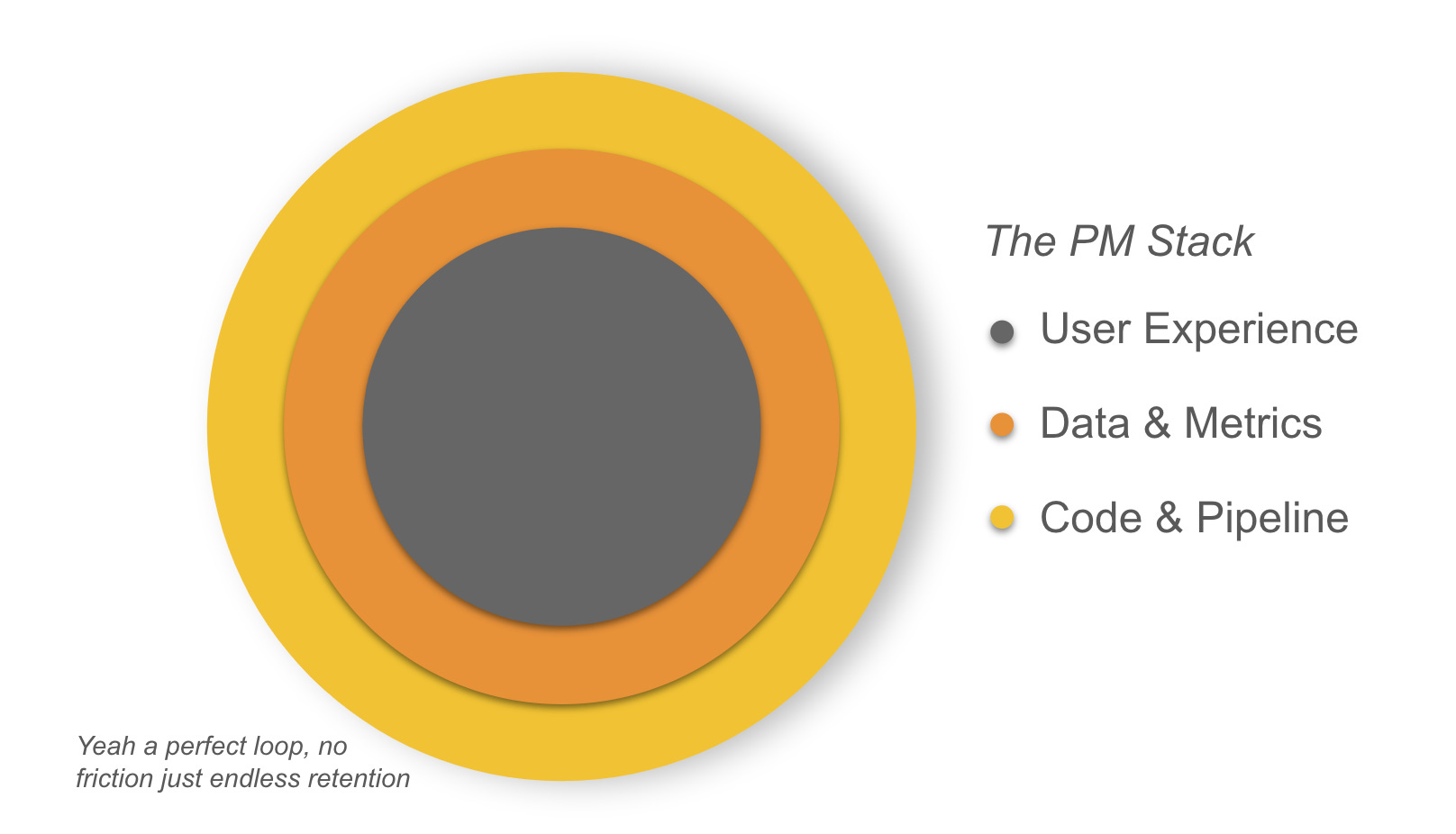
Imagine a user journey as a loop, not a linear path. This loop starts the moment a user contemplates downloading your app, influenced perhaps by a cleverly crafted marketing campaign. The journey continues as they interact with your product, each action leaving a digital footprint – a trace of data that weaves through the very fabric of your application’s code.
In this intricate dance of experience, data, and code, every loop becomes a story in itself. It's not just about the user interface; it's about the underlying processes that make that experience possible. And these processes are shaped by three critical layers: the user experience (UX), the data generated, and the code that binds it all together.
As Product Managers, understanding these layers in detail is key. For non-technical product managers, leveraging tools like large language models can be a game changer in translating the complexities of code into actionable insights. This holistic view is essential for fine-tuning every aspect of the user journey, ensuring that each loop is as engaging and efficient as possible
Mastering the Map: Understanding and Optimizing User Flows
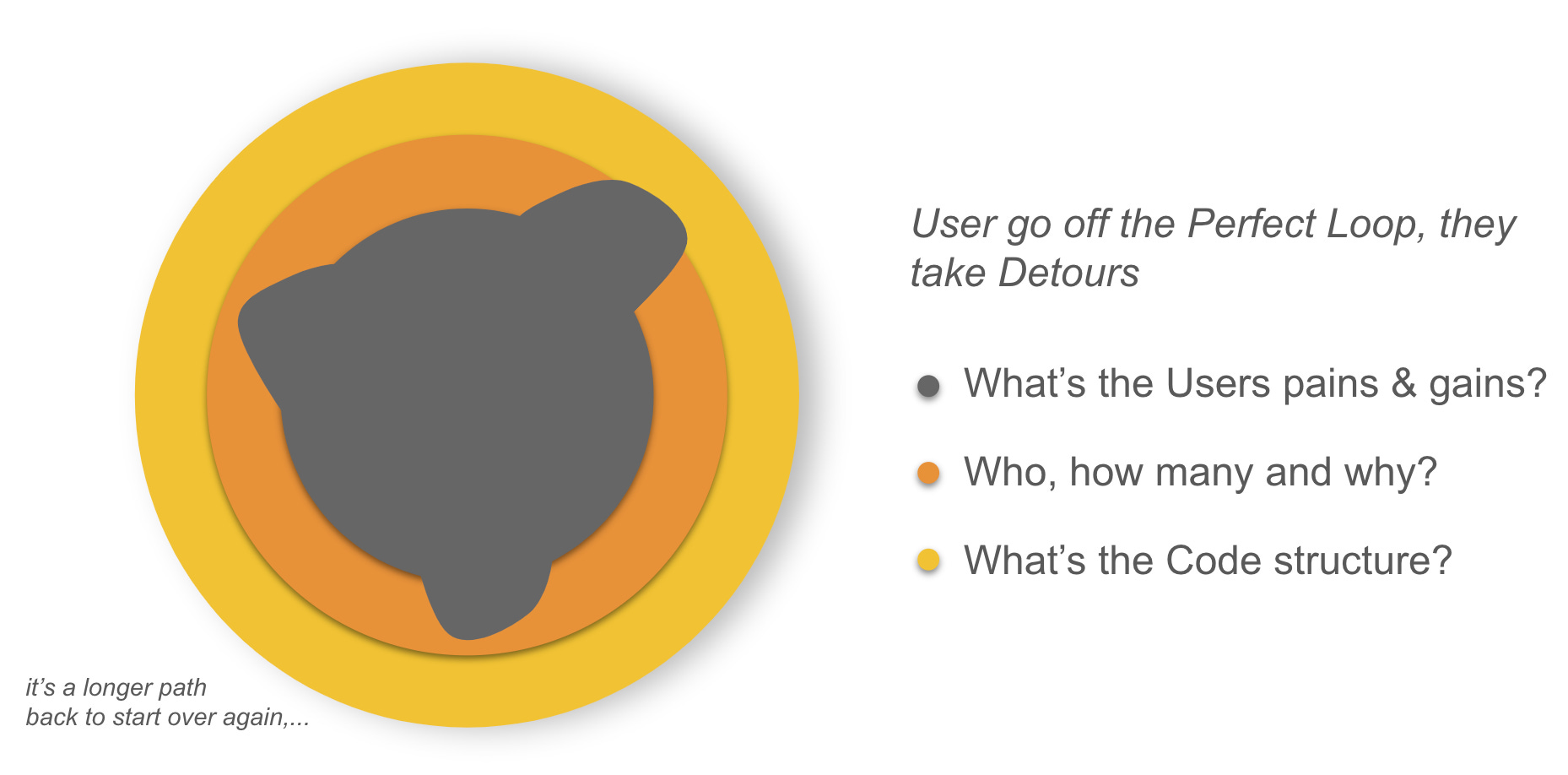
Mapping out the user journey is akin to charting a course through uncharted waters. It begins with delineating the 'happy path' – the ideal, frictionless experience a user has with your product. But true mastery lies in recognizing and understanding the 'unhappy paths' – the roadblocks, the confusion points, and the missed opportunities.
This process involves identifying the right metrics for each flow. These metrics act as beacons, guiding you to the health of each interaction. Ask yourself: Which flows are essential, and which are superfluous? How costly is it not to resolve a particular issue? The data you gather here isn’t just numbers; it’s a narrative of the user experience, telling you what works and what needs reworking.
But understanding the user flow is only half the story. The other half is comprehended through the lens of code. The software’s architecture and logic dictate the order and manner in which these user interactions unfold. Grasping this logic is crucial. It provides insights into the feasibility and complexity of potential changes, allowing you to set more accurate and realistic improvement goals.
This dual understanding of user experience and underlying code empowers you to define better, more impactful metrics. It informs you not just about what can be improved but also about how it can be done efficiently and effectively.
Data-Driven Insights: The Backbone of User-Centric Design
In the intricate tapestry of user journeys, data is the thread that holds everything together. To truly understand and enhance these journeys, you need a systems overview that captures every significant touchpoint. This means gathering data from every conceivable source – the app, the web interface, backend processes, operations, app stores, and more.
Integrating this data requires a systems thinking approach. You're not just looking at isolated data points; you're trying to understand how they interconnect and influence each other. This comprehensive view enables you to see the journey not just as a series of steps, but as an interconnected ecosystem where each element affects the user's experience.
Here’s a crucial caveat: metrics should be more than just numbers for the sake of numbers. Avoid the trap of vanity metrics – those that look good on paper but offer little real insight into the health and success of your product. Each metric you track should be carefully chosen for its direct impact on the business. If a metric doesn’t offer a clear view of performance or doesn’t influence business decisions, it’s likely not worth your attention. Focus on metrics that matter, those that, when changed, have a significant impact on your business’s bottom line and customer satisfaction.
This process also involves diving deep into design research data. Personas, user needs and wants, sociographics, demographics, and environmental factors – all these aspects give you a multi-dimensional understanding of your users. They help you craft experiences that are not just functional but also resonate on a personal level.
Armed with this data, you can start to map out the complete flow of a user journey. This map isn't just a diagram; it's a strategic tool that shows you where to focus your efforts. By identifying the most crucial touchpoints, you can prioritize improvements that will have the greatest impact on the user experience.

Identifying High-Value Flows: Prioritizing with Purpose
Once you have mapped the user journey and are armed with a wealth of data, the next step is to identify the high-value flows. These are the parts of the user journey that, when optimized, yield the most significant benefits in terms of user satisfaction, engagement, and ultimately, business revenue.
But how do you determine which flows are high-value? This is where the Cost of Delay framework comes into play. This approach involves assessing the financial impact of not implementing changes or improvements in specific areas. By understanding the financial implications – including factors like revenue, profit, lifetime value (LTV), cost of operations, customer acquisition costs (CAC), and more – you can prioritize efforts based on their potential return on investment.
Cost of Delay Framework for everyone, proven to work!
Remember, not every flow or feature will have a clear-cut financial metric attached to it. In such cases, use your gathered data to make informed assumptions. Consider the number of users affected, the frequency of the flow, and the potential for long-term engagement. This data-driven approach ensures that you are not just making changes, but making changes that matter – changes that will have a tangible impact on your users and your business.
In your quest for optimization, it’s important to have a holistic view of your metrics and financial data. Don't be swayed by shifting priorities or the latest trends. Stick to your data and your understanding of what will drive the most value for your users and your business.
Navigating Challenges: Setting Up for Success
In the pursuit of optimizing user flows, it’s common to encounter organizational hurdles. These can range from resistance to change, conflicts of interest, to limitations in data accessibility. Here are strategies to navigate these challenges and set up a successful measurement and iteration process:
Overcoming Organizational Readiness Challenges
Your organization might not be fully prepared for the level of detail and analysis required in optimizing user flows. This is often a people problem and a scale problem. The key is to start small – focus on your domain, gather data within your scope, and demonstrate success through tangible improvements. Once you have a successful model running, it will influence broader organizational change. If you find persistent resistance and lack of support, it may be a sign to reevaluate your position in the company.
Influence and Data Accessibility
As a product manager, you might not have direct control over every aspect of the user journey. Collaborate closely with your developers and other stakeholders to prioritize data collection. Use your influence to advocate for the importance of this data. If you need data from customer support tickets, for instance, work with the support team to understand and facilitate their needs in exchange for the data you require. Creating win-win situations is key to unlocking data access.
Practical Setup for Data Analysis
Set up a system for measuring and analyzing data across various touchpoints – web, app, backend, and human interactions within your organization. You need to be equipped with tools for A/B testing and analytics that allow you to independently explore data and validate hypotheses.
It's crucial that you, as the product manager, take the lead in setting up and managing these analytical tools. Avoid relying solely on external tools like Tableau or Looker, which may require analyst intervention for query changes. You need the flexibility to explore data at your convenience. Familiarize yourself with SQL or similar tools to maintain direct access to your data sources.
This approach culminates in a comprehensive map of user flows, complete with current metrics and a framework for prioritizing resource allocation. By systematically addressing each flow, you ensure continuous improvement in the user experience and business outcomes.
Conclusion: Embracing a Data-Driven, User-Focused Future
In this journey of mapping and optimizing user experiences, we've traversed the realms of data, code, and human interaction. The key takeaway is clear: a successful product manager must not only understand but also actively shape the user journey. By embracing a data-driven approach and prioritizing based on real impact, you can transform the way your product interacts with and satisfies your users.
Remember, the path to optimization is continuous and ever-evolving. Each user interaction, each piece of feedback, and every line of code offers an opportunity to learn and improve. Your role as a product manager is to weave these elements together into a cohesive, engaging, and valuable user experience.
Stay curious, stay analytical, and above all, stay focused on what truly matters – delivering experiences that resonate with your users and drive your business forward. The journey is complex, but armed with the right tools, the right mindset, and a relentless focus on your users, you can navigate it successfully.
Share this guide with your colleagues and peers in the product management community. Together, let's build a future where user experiences are not just designed, but meticulously crafted for success.
Next up: The Fantastic 4. My framework for Product Management Success!